What is Restorative Justice in Education?
“The term restorative justice in education can be defined as facilitating learning communities that nurture the capacity of people to engage with one another and their environment in a manner that supports and respects the inherent dignity and worth of all.” – Brenda Morrison
As an organization, we aim to achieve this goal by developing tailored, student-driven curricula aligned with each school’s culture. We support students, faculty, administrators, and parents in implementing Restorative Justice practices, including peer mediation, community-building circles, restorative circles, and group conferencing. These methods reinforce the principles of Restorative Justice and help foster a supportive, caring learning environment for everyone in the community.
Restorative Justice is a powerful tool that brings communities together, promotes accountability, teaches communication and leadership skills, and brings peace.
The Benefits
Restorative Justice programs in education can provide students with opportunities to experience the consequences of their decisions within their school community. Some of the most commonly identified benefits of peer mediation, Restorative Circles, and Community Circles at the school level are:
o Stronger sense of peace and unity throughout the school community.
o Stronger sense of empathy and communication skills.
o The resolution of minor disputes that interfere with the education process without the need for administration.
o Problems can be settled before going to administration. Schools that have fully implemented this program have been able to reduce the number of cases seen by administration by as much as 95%.
o A stronger sense of cooperation and school community is achieved, and school climate is improved through decreasing tension and hostility, and reducing the time that faculty and administration spend settling disputes.
o Peer mediators/facilitators and students who participate in restorative justice programming have been shown to demonstrate improved self-esteem and improved positive status among their peer group, as well as improved academic confidence.
o Peer mediators/ facilitators develop communication and leadership skills, as well as practical life skills. They often carry these skills beyond the school doors and into their families and communities, helping to resolve problems more effectively than before.
o Perhaps the most beneficial aspect of a Restorative Justice program is the individualized, empowering experience that it offers to each student who utilizes it to resolve a conflict. Empowering students to resolve conflicts independently and responsibly, without adult intervention, is a significant milestone in youth development.
Circles
Circles have many purposes, but the two most common are, first, to proactively build and strengthen the school community. When using the Circles model regularly with students, they build stronger bonds with one another, their teachers, and the broader school community. In a Circle, each participant has a chance to share, and everyone else listens without interruption. This allows each participant to feel seen and heard, to develop empathy, to build connections, and even to grow affection for the other participants.
Secondly, a Circle can be restorative in conflict situations. Circles differ from mediation, as everyone is on equal footing in a circle, including the facilitator. A restorative circle would be more appropriate for conflicts involving multiple parties, including bystanders, and for conflicts with many aspects that need to be addressed. Circles can also be used as a preventative measure when tension is first sensed. If you are interested in learning how to facilitate Circles, please check out our training events here.
Peer Mediation
Peer mediation is problem-solving by youth with youth. It is a process in which two or more students involved in a dispute meet in a private, safe, and confidential setting to resolve issues with the assistance of trained student mediators.
Peer Mediation is one way to focus students on a Restorative Justice Model. Restorative justice practices hold that consequences for student misbehavior (i.e., student-to-student conflict) should be: 1. Focus on repairing any harm caused; 2. Encourages students to take responsibility for their actions; and 3. Helps students learn to avoid such behavior going forward.
Links to other helpful sites:
Our Executive Director and Trainer Alex Yrungaray, M.Ed.
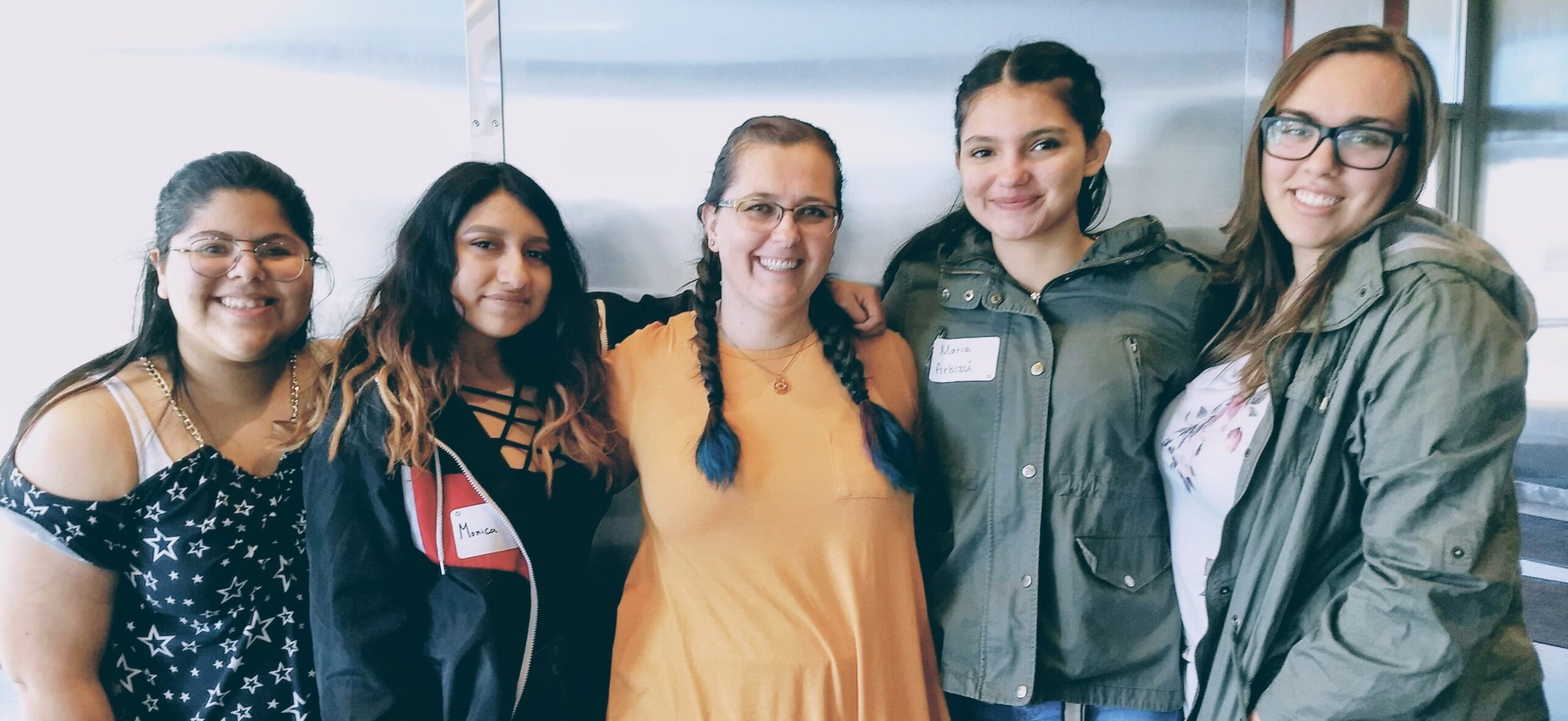
Alex Yrungaray (center) is the founder and Executive Director of Building Up Youth, a nonprofit organization that brings the Restorative Justice philosophy and practices to organizations, schools, and businesses nationwide. Alex specializes in working with school communities to shift from a punitive to a restorative-minded philosophy. She also specializes in developing a student-driven curriculum tailored to each school’s unique culture. Then, training faculty, staff, and students in community building techniques, Circles, peer mediation, and other Restorative Justice in Education philosophy and practices. She has also developed and taught leadership curriculum to middle and high school students.
Alex is a founding member of the Restorative Justice Collaborative of Utah. Sits on the Utah Board of Juvenile Justice and the Juvenile Justice Oversight Committee as the Restorative Justice specialist. She trains those working with youth to facilitate Circles internationally through Teen Talking Circles, based in Bainbridge Island, WA. To deepen her research and practice in restorative justice, she recently completed her Master of Education with a concentration in Restorative Justice in Education and is currently pursuing a certificate in Trauma and Resilience in Educational Environments at Eastern Mennonite University.
When Alex isn’t focused on restorative justice, she loves to crochet, play with mud in the ceramics studio, enjoy the outdoors, and travel with her husband and four children, who live in the heart of downtown Salt Lake City, Utah.